Written Culture: The Caves Monastery in Kyiv and the Ostromir Gospel in Novgorod
Consecrated most probably in 1089 (although some sources point to 1051, about five years after the Church of St. Sophia in Kyiv), the Caves Monastery became not only the paradigm for Athonite monasticism in Rus´, but the most relevant school for future high echelons of the Kyivan Church. It is estimated that half the bishops in pre-Mongol Rus´ and almost all abbots had been monks, and trained in manuscript production in the Caves Monastery, some of whose practices were described in the monastery Paterik .
The Ostromir Gospel , commissioned by the governor, or posadnik , of Novgorod, is the oldest dated Slavonic manuscript in the world, dated by a colophon to the year 1056/57. Probably created by Byzantine artists in Novgorod, it served as model for the Mstislav Gospel (ante 1117) that was also made in Novgorod.
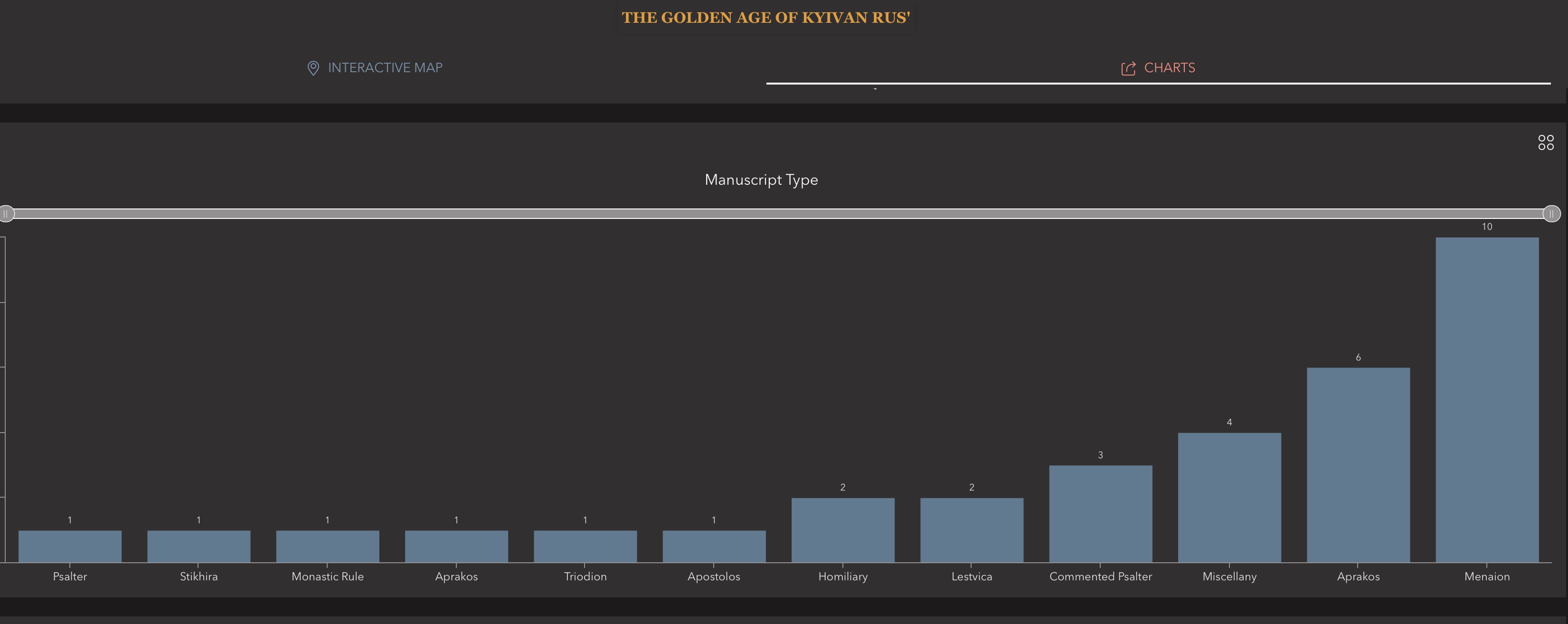
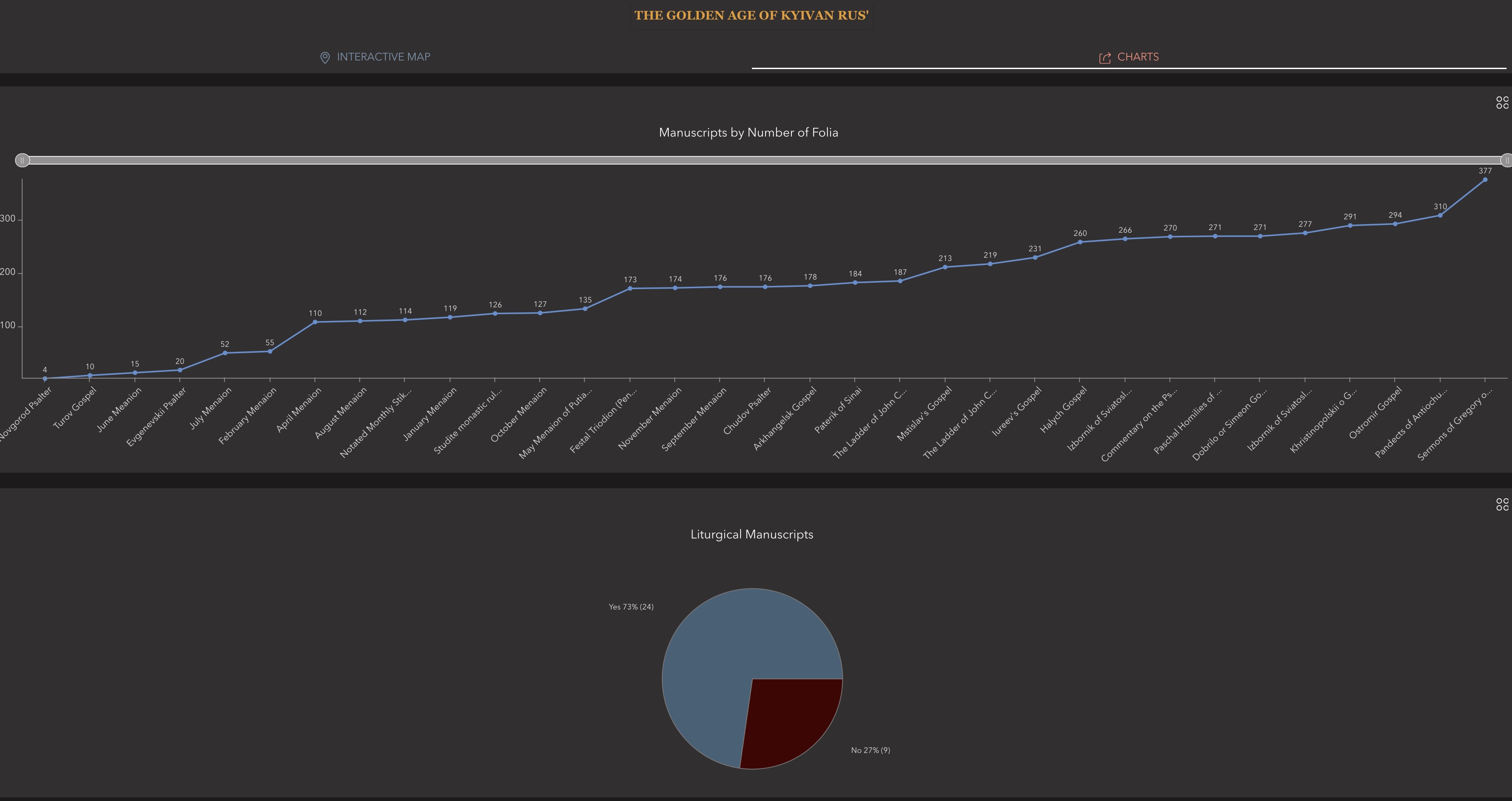
The majority of the thirty-three manuscripts analysed were made for the Christianising mission, and therefore have a clear liturgical function (Figure 4.1). As the Christianisation of the lands developed, and more monasteries were founded, the number of the codices grew parallel to the growing of monasteries where they were created. Manuscripts could be a few folia long or a few hundred folia in length, depending on the topic, and their state of preservation, because unfortunately many are now fragmentary (Figure 4.2)
Unfortunately, a destruction of a monastery would also imply the destruction of its library, and therefore in areas, such as the south and around Kyiv where many more monasteries were destroyed, the manuscripts that were within their walls perished with it. This can give a false impression that writing activity in the north was more intense than in the south, which is most probably not the case. Regrettably, the vast majority of Rus’ manuscripts were taken to Moscow and St. Petersburg during the time of the Russian Empire and the USSR. From the thirty-three items analysed in the project, only one, the “Khristinopolskii o Gorodisskii Apostol”, a collection of excerpts of apostolic letters to be read in the liturgy, composed most probably in Volhynia, is currently in Lviv.
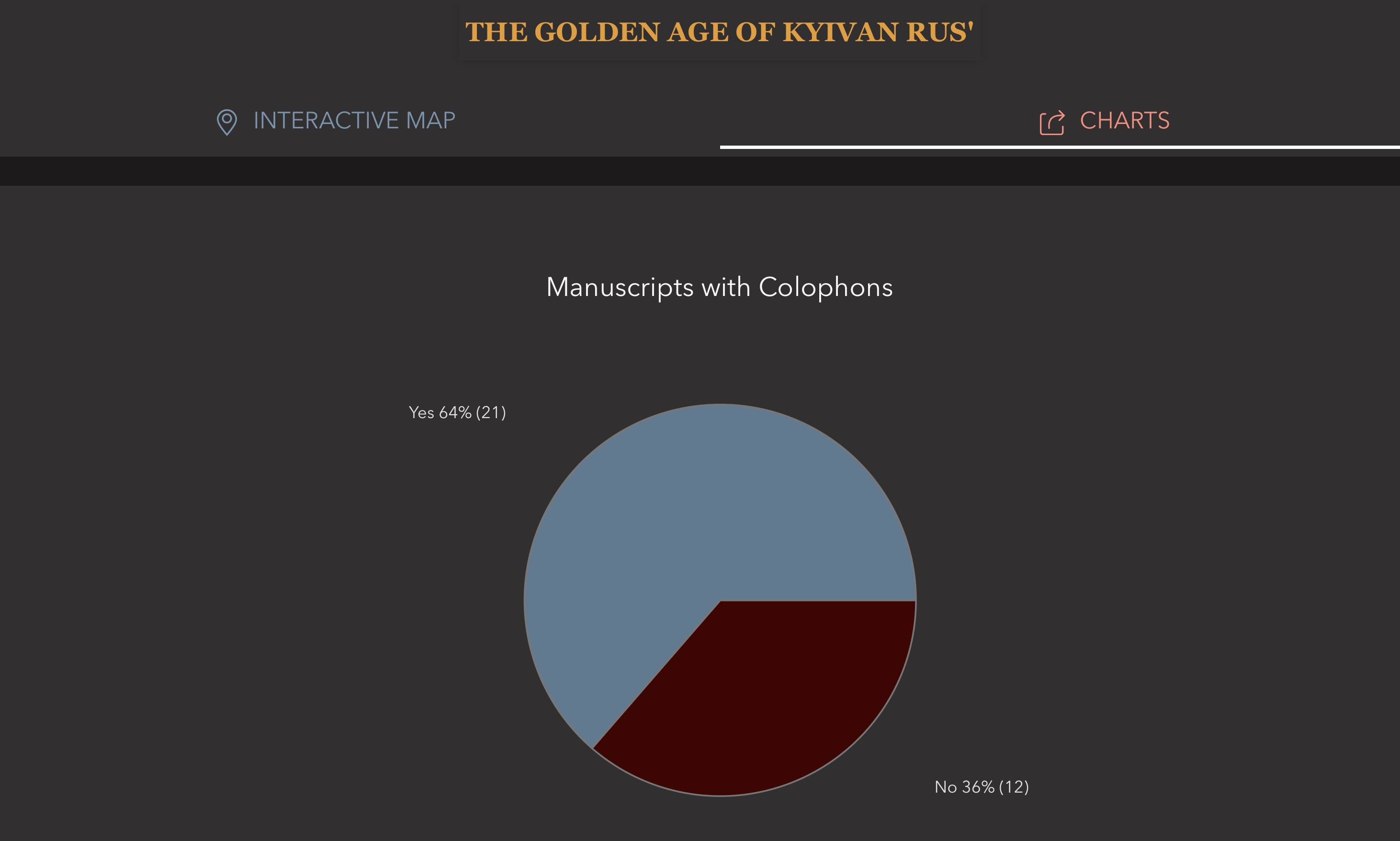
Contrary to what has been repeatedly stated in scholarly literature about the lack of colophons in early East Slavic manuscripts, the analysis of the evidence shows that more than half of the manuscripts contain a colophon from where we have learnt the names of about eighteen different scribes who participated in the copying of manuscripts (Figure 4.3).